
Are You Navigating the Symptoms of Perimenopause?
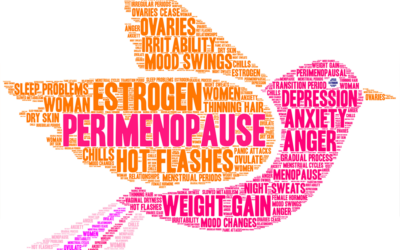
When I was in my mid-forties I started experiencing a number of seemingly unrelated symptoms – weight gain, brain fog, sore joints, and fatigue. I tried all sorts of one-off fixes – diets, exercise programs, and magic pills – without success. It wasn’t until my period started changing and I experienced hot flashes that the penny dropped and I connected everything to perimenopause. Did it happen like that for you too?
I wonder why there isn’t more talk about perimenopause? After all, it happens to all ladies, although it’s true that some have more challenges with it than others.
Perimenopause (and menopause) is the bookend to puberty, the reproductive part of our lives. So it includes a lot of hormone changes as the reproductive hormones – primarily estrogen and progesterone – naturally decline.
But the real challenge comes with how those changes impact our wellbeing. Like mood swings, inability to sleep, extreme fatigue, joint pain, digestive issues, hot flashes, night sweats, low sex drive and weight gain. What’s up with all that? Why can’t we just wind up our periods and call it a day?
There are two paths for getting help with perimenopause. The medical path and the lifestyle path. Unfortunately, many doctors are not well equipped to help. The American Association of Retired Persons reports most medical schools and residency programs don’t teach physicians in training about menopause. To make matters worse, a recent survey found that just 20% of ob-gyn residency programs provide any kind of menopause training.
When asked, 3 out of 4 ladies reported they did not get adequate treatment when they brought perimenopausal and menopausal concerns to their doctors. And 84% of women say their symptoms interfere with their lives and some are even debilitating.
One of the main areas where doctors should be able to help is in prescribing Hormone Replacement Therapy (HRT). Even though treatment has changed dramatically over the past decade, many doctors are unaware. The new body identical treatment is administered in patches or gel and poses none of the earlier health concerns for breast cancer and heart disease. The topical delivery method means that the liver is completely bypassed, and that absorption through the skin dramatically changes the health risks. Dr. Louise Newson, The Menopause Doctor, goes so far as to encourage women to consider taking body identical HRT for the protections it provides against heart disease, osteoporosis, diabetes and Alzheimer’s.
The other path to get help with the symptoms of perimenopause is through lifestyle. There is a lot that lifestyle habits and behaviors can do to demystify the changes. It turns out the healthy practices of diet and exercise that ladies maintained before perimenopause are unlikely to suit them very well once they enter perimenopause. As our nutrition needs change, so does our digestion. We no longer need all the protein we used to eat, and our sensitivity to sugar and processed foods heightens. Bloating, brain fog, joint pain and weight gain result.
And with hormonal changes to our muscles and joints, the type of exercise and movement that is beneficial also changes. Even if you have always been athletically active, the fatigue and joint pain can make ambitious workouts very difficult. In fact, high impact and anaerobic exercise can cause stress to the system and result in the production of cortisol, the stress hormone. The timing and type of movement you choose take on new importance.
Hormonal changes impact sleep, especially when combined with food choices and stress. So figuring out new sleep hygiene habits are vital to being able to restore the body each night with quality sleep. As we sleep, the body is busy removing dead cells burning fat and rebuilding tissue. The brain catalogues the day’s experiences and builds up memories. Without adequate sleep, the body is stressed when it cannot carry out these maintenance functions and produces cortisol in response. That in turn stimulates appetite, which produces more insulin leading to fat production (and stubbornly stored around the middle). So getting enough good sleep is vital to being able to adapt through the changes of perimenopause.
And finally, mindfulness – getting your head in the game is so important. As it happens, the mind can only focus on one thing at a time. So if you control some of the things you tell yourself and make them positive things, you will benefit from that. Rather than tell yourself that you’re a lazy slob or beat yourself up because you don’t have enough willpower, you tell yourself that you’re an intelligent woman and the goal is achievable. Meditation is a great way to calm the mind, focus on positive things and create endorphins. This can really help to create positivity, reduce cortisol levels and help with sleep.
Are you satisfied with the support your doctor has been giving you for the symptoms of perimenopause? Some symptoms are best resolved using HRT. But many more can be resolved by taking a lifestyle approach.
The beginning of my perimenopausal journey didn’t go well, and I’m determined to help ladies navigate this chapter of their lives so they can take control of the next decades and live their best lives.
To find out how you can navigate the symptoms of perimenopause, click the button to book your free call with Dyna Vink, Health and Nutritional Coach.
Meet Dyna Vink: Helping Women Find Answers Beyond "Everything Is Normal"

"Your labs look normal."
"But it doesn't feel normal. What's going on?"
"Surely I'm not the only one who feels this way."
For many women, the years leading up to menopause can feel confusing, frustrating, and isolating. They experience fatigue, brain fog, poor sleep, anxiety, weight gain, digestive issues, joint pain, hot flashes, or mood changes, only to be told that their blood tests are "normal" and that their symptoms are simply part of getting older.
For Dyna Vink, that answer wasn't good enough.
As a certified Integrative Health Practitioner and founder of Holistic Nutrition Lifestyle, Dyna experienced many of these challenges herself. Like countless professional women, she found that the symptoms of perimenopause affected far more than her physical health—they impacted her confidence, productivity, relationships, and overall quality of life. Although she knew something wasn't right, traditional testing offered few answers.
That experience inspired her to look beyond conventional approaches and discover the value of functional medicine testing—an evidence-based method of identifying underlying imbalances that standard laboratory tests may not reveal. The insights she gained transformed her own health and ultimately shaped the way she now helps other women.
Today, Dyna's mission is simple: to help women who feel unheard or dismissed finally understand what is happening in their bodies and provide them with a clear, personalized path back to health.
While hormone replacement therapy (HRT) can be an effective option for many women, it does not address every cause of perimenopause symptoms. Fatigue, digestive problems, brain fog, anxiety, inflammation, joint pain, stubborn weight gain, and low energy may also be influenced by gut health, nutritional deficiencies, food sensitivities, chronic stress, hormone imbalances, heavy metal exposure, mold toxicity, parasites, or other underlying factors.
Dyna believes lasting improvement begins with understanding these root causes rather than assuming every symptom is solely hormone related.
Unlike programs that offer generic advice or one-size-fits-all meal plans, Dyna's practice is built around a comprehensive four-month transformation program that combines functional medicine testing, personalized protocols, coaching, and ongoing support.
Every client begins with an in-depth health assessment and one-on-one consultation to understand their symptoms, medical history, lifestyle, and goals. Based on this assessment, appropriate at-home functional medicine tests are recommended to investigate the underlying factors contributing to their symptoms.
While laboratory samples are being analyzed, clients begin a guided three-week detoxification and lifestyle reset designed to support the body's natural detoxification processes, reduce inflammation, and establish healthy foundations for healing.
Once test results are available, Dyna carefully reviews each finding with her clients in clear, easy-to-understand language. Rather than overwhelming them with medical terminology, she explains what the results mean, how they relate to their symptoms, and what they reveal about their overall health.
Using this information, she develops a fully personalized protocol that may include targeted nutrition, supplementation, lifestyle modifications, stress management, and other evidence-based recommendations designed specifically for each individual.
Throughout the program, clients meet with Dyna every two weeks to review progress, answer questions, monitor symptoms, and make adjustments as their health improves. Between appointments, ongoing email support ensures that clients never feel they are navigating the process alone.
At the completion of the protocols, progress is carefully evaluated, and where appropriate, follow-up functional medicine testing may be recommended to confirm that underlying imbalances have been resolved and to guide any final refinements. Clients also have the option of ongoing maintenance coaching to help sustain their results and optimize long-term health.
What truly sets Dyna apart is not simply the tests she uses, but her ability to translate complex health information into practical, personalized action. She believes every woman deserves to feel heard, understood, and empowered to make informed decisions about her health.
Through a compassionate, evidence-based, root-cause approach, Dyna is helping women replace confusion with clarity, regain their energy and confidence, and rediscover what it feels like to truly thrive—not just survive—through perimenopause.

Holistic Nutrition Lifestyle | Copyright © 2026 | All Rights Reserved
“This site is not a part of the Facebook website or Facebook Inc. Additionally, this site is NOT
endorsed by Facebook in any way.
FACEBOOK is a trademark of FACEBOOK, Inc.”